
WhatsApp Marketing Software for E-commerce: How to Drive More Sales and Recover Abandoned Carts
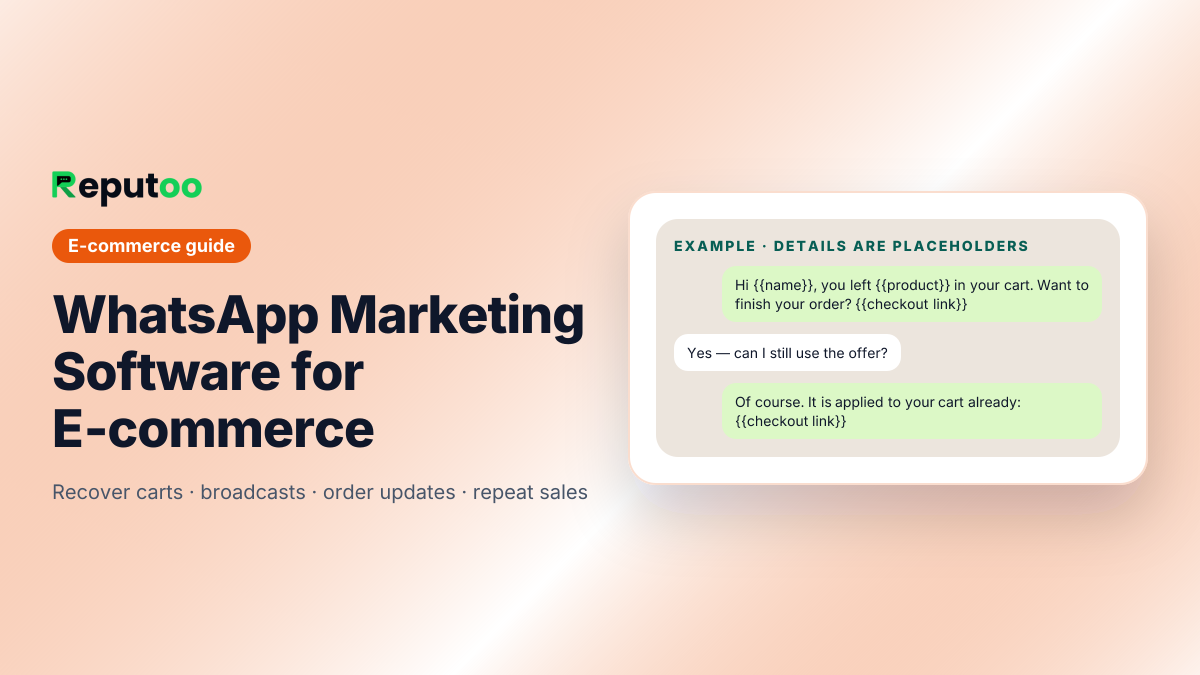
If you run an e-commerce store, you already know how hard it can be to turn traffic into revenue. Visitors browse products, add items to their cart, and then leave before buying. Some customers purchase once and never return. Others need a reminder, a little reassurance, or the right offer at the right moment before they complete checkout. That is where WhatsApp marketing software becomes valuable.
For e-commerce brands, WhatsApp is more than just a messaging app. It is a direct response channel that can help you recover abandoned carts, promote products, send order updates, and build repeat sales without depending only on ads or email. Because customers already use WhatsApp every day, it gives your brand a faster and more personal way to stay in touch.
The biggest advantage is timing. In e-commerce, a message sent at the right moment can bring a customer back to complete a purchase. A simple reminder, a limited-time offer, or a helpful order update can reduce friction and improve conversion rates. WhatsApp makes those interactions easier to automate, track, and scale.
On this page (10 sections)
- 1.What Is WhatsApp Marketing Software?
- 2.Why E-commerce Brands Need WhatsApp Marketing
- 3.How WhatsApp Marketing Software Helps E-commerce
- 4.Key Features to Look For
- 5.Why Reputoo Is a Strong Fit for E-commerce
- 6.Best Use Cases for WhatsApp in E-commerce
- 7.Common Mistakes to Avoid
- 8.How to Build a Simple WhatsApp Marketing Strategy
- 9.Frequently Asked Questions
- 10.Final Thoughts
What Is WhatsApp Marketing Software?
WhatsApp marketing software is a platform that helps businesses send broadcasts, automate conversations, and manage customer communication on WhatsApp. For e-commerce stores, it can be used to promote products, recover lost sales, send notifications, and re-engage past buyers.
The best software does much more than send messages. It allows you to segment audiences, schedule campaigns, create automated flows, and track results. That means you can move from one-off manual messaging to a repeatable system that supports sales and retention.
In practice, this kind of software helps online stores do things like:
- Send promotional campaigns to the right customer segments
- Recover abandoned carts automatically
- Send confirmation and shipping updates
- Re-engage customers after they purchase
- Manage sales and support conversations in one place
For a growing store, that can make WhatsApp one of the most effective channels in the entire customer journey.
Why E-commerce Brands Need WhatsApp Marketing
E-commerce is a crowded space. Customers compare prices, abandon carts, and move quickly from one brand to another. Traditional channels like email still matter, but they are often slower and easier to ignore. Ads can be effective, but they are expensive and don’t always build long-term loyalty.
WhatsApp gives online brands a more direct way to communicate.
Here’s why it works so well:
- Messages are usually seen faster than email
- Communication feels more personal
- Customers can respond immediately
- Automated reminders can recover sales
- Post-purchase messages can improve retention
This matters because the e-commerce funnel does not end when someone adds a product to cart. Many shoppers need multiple touchpoints before they buy. Others need reassurance after purchase. Some need a reminder to come back. WhatsApp helps you manage all of those moments with less manual work.
For brands that sell online, WhatsApp can support:
- Acquisition
- Conversion
- Recovery
- Retention
- Repeat purchases
That makes it one of the most flexible marketing channels available.
How WhatsApp Marketing Software Helps E-commerce
A strong WhatsApp marketing platform supports the full customer journey. It helps you communicate at the right time, with the right message, to the right audience.
1. Broadcast Campaigns
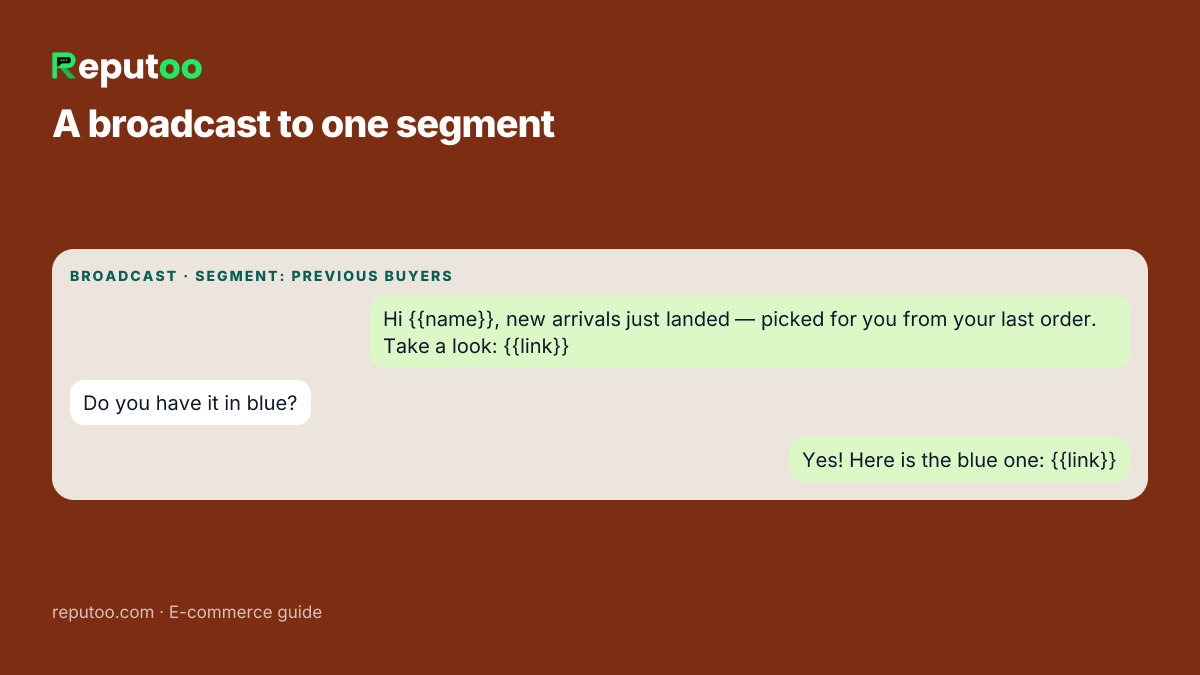
Broadcasts let you send announcements, offers, and promotions to a targeted group of customers at once. This is useful when you want to launch a new product, announce a flash sale, or promote a seasonal discount.
Instead of sending one message at a time, you can reach hundreds or thousands of customers with a single campaign. When broadcasts are paired with segmentation, they become even more effective because the message can match the customer’s interests or buying behavior.
For example:
- New arrivals for previous buyers
- Discount offers for inactive customers
- Seasonal promotions for high-value customers
- Restock alerts for people who showed interest in a product
The goal is not to spam everyone. The goal is to send messages that feel relevant enough to spark action.
2. Abandoned Cart Recovery
Abandoned cart recovery is one of the strongest use cases for WhatsApp in e-commerce. A customer may add a product to cart and then leave because of price concerns, distraction, shipping questions, or simple hesitation. If you wait too long, that sale may be gone.
With WhatsApp automation, you can send a reminder shortly after the cart is abandoned. You can also add follow-up messages later if the shopper still does not buy.
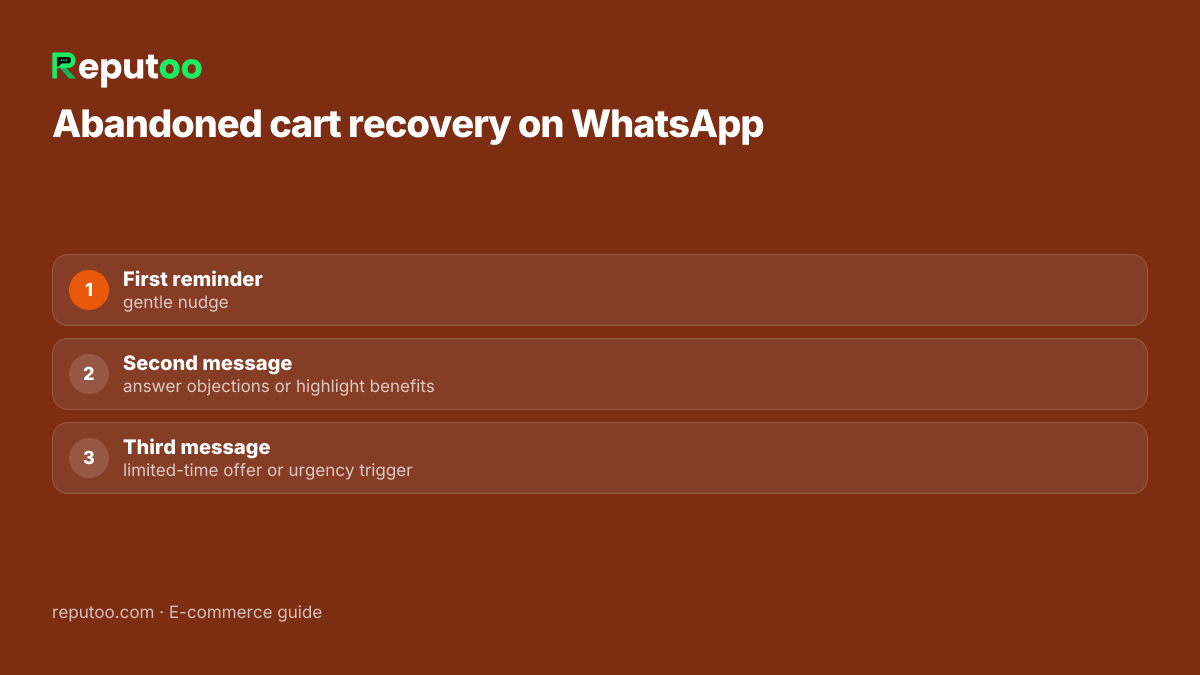
A typical recovery flow may include:
- First reminder: gentle nudge
- Second message: answer objections or highlight benefits
- Third message: limited-time offer or urgency trigger
This works because the customer is still warm. They already showed buying intent. WhatsApp just helps you bring them back at the right time.
3. Order Updates
Customers want visibility after they place an order. They want to know when it has been confirmed, shipped, and delivered. If they don’t get that information quickly, they may contact support or lose trust in the brand.
WhatsApp makes order communication much easier. You can automatically send:
- Order confirmation
- Payment confirmation
- Shipping notifications
- Delivery updates
- Delay alerts
These messages improve the customer experience and reduce the load on your support team. They also keep your brand present after the sale, which can help with future repeat purchases.
4. Customer Segmentation
One of the biggest mistakes e-commerce brands make is sending the same message to everyone. A customer who bought last week does not need the same message as someone who has not purchased in six months. A high-value customer should not get the same offer as a first-time visitor.
Segmentation solves this problem.
With WhatsApp marketing software, you can group customers based on:
- Purchase history
- Product interest
- Order value
- Location
- Engagement level
- Cart behavior
- Past campaign activity
This allows you to send more relevant messages, which usually means better engagement and stronger conversion rates. Relevant messages feel helpful rather than intrusive.
5. Re-engagement Campaigns
Many stores focus so heavily on new customer acquisition that they forget to market to past buyers. That is a missed opportunity. People who already bought from you are often much easier to convert again than completely new leads.
You can use WhatsApp to run re-engagement campaigns such as:
- Win-back offers
- Back-in-stock alerts
- New product announcements
- Loyalty rewards
- Reminder messages for inactive customers
These campaigns keep your brand top of mind and help bring buyers back into the sales cycle.
6. Sales and Support Conversations
WhatsApp is not only for marketing. It is also a useful channel for sales and support. Customers often have questions before they buy. They may want product recommendations, sizing help, shipping details, or reassurance about the return policy.
When those conversations happen quickly, the chance of conversion goes up.
A shared inbox and automation tools can help your team:
- Reply faster
- Handle multiple conversations
- Route messages to the right person
- Keep customer data organized
- Close sales with less friction
For e-commerce, this combination of marketing and support is especially powerful because the buying process is often short and decision-driven.
Key Features to Look For
If you are evaluating WhatsApp marketing software for your store, there are a few features that matter most.
Broadcast messaging
You need the ability to send promotions to segmented customer groups at scale.
Automation and drip campaigns
This is essential for abandoned cart recovery, welcome flows, and post-purchase messages.
Abandoned cart flows
A good platform should allow you to automate reminders when shoppers leave without buying.
Segmentation and tagging
You should be able to organize customers by behavior, purchase history, and campaign activity.
Shopify or WooCommerce integration
If you run an e-commerce store, your WhatsApp tool should connect with your storefront and customer data.
Shared team inbox
Your sales and support team should be able to manage conversations in one place.
Analytics and ROI reporting
You need to know which campaigns perform well and which ones generate revenue.
Without these features, WhatsApp may still be useful, but it will not function like a true growth system.
Why Reputoo Is a Strong Fit for E-commerce
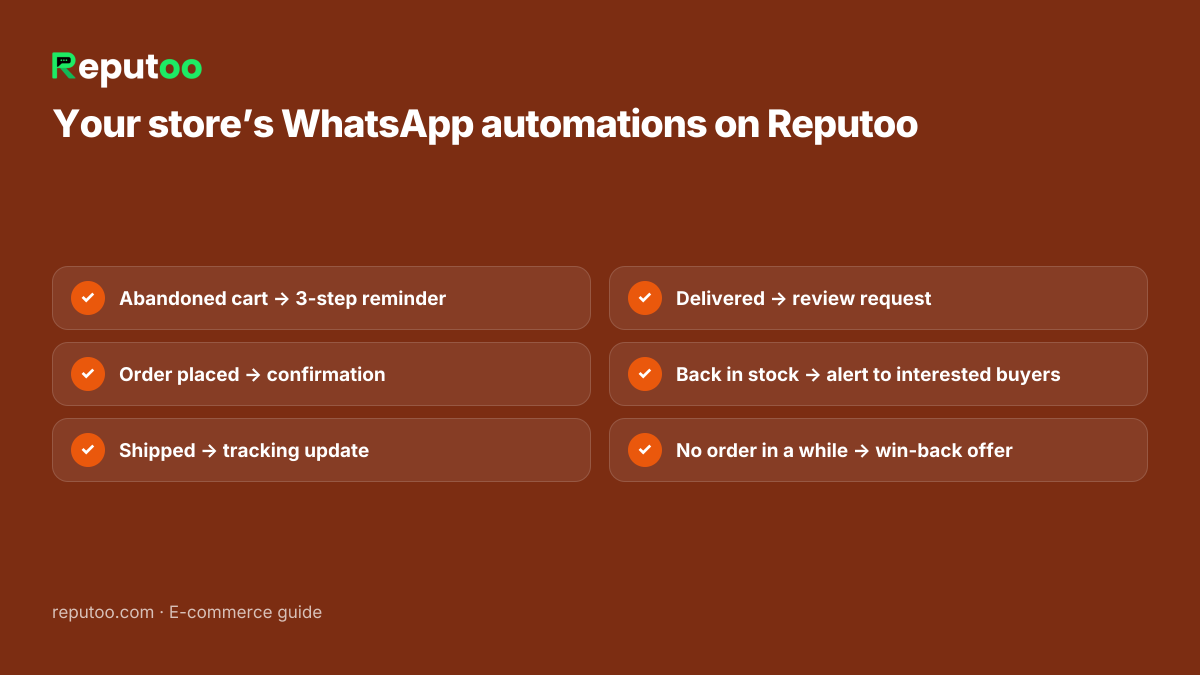
Reputoo is built for e-commerce brands that want to use WhatsApp in a more strategic way. Instead of just sending messages, you can automate communication, recover revenue, and manage customer conversations from one platform.
With Reputoo, e-commerce teams can:
- Send targeted WhatsApp campaigns
- Recover abandoned carts automatically
- Keep customers updated after purchase
- Centralize conversations in one inbox
- Track which campaigns drive revenue
This is especially helpful if your team is trying to do more with fewer tools. Many brands use separate tools for campaigns, support, and follow-ups. Reputoo brings those workflows together so the customer experience feels smoother and your team spends less time switching between systems.
For stores that want to improve conversion rates and retention, that makes WhatsApp a much stronger part of the marketing mix.
Best Use Cases for WhatsApp in E-commerce
The best WhatsApp campaigns are tied to moments when the customer is most likely to act.
Here are some of the most effective use cases:
Welcome messages after signup
When someone joins your list, send a friendly welcome message with a first-offer incentive or useful brand information.
Cart abandonment reminders
Follow up when a shopper leaves items in their cart and encourage them to complete the purchase.
Flash sale promotions
Use urgency to drive traffic and purchases during short promotions.
Back-in-stock alerts
Let interested customers know when a product is available again.
Order confirmation and delivery updates
Keep buyers informed after purchase so they feel confident and supported.
Product review requests
After delivery, ask customers to leave feedback or rate their experience.
Win-back campaigns
Reconnect with customers who have not purchased in a while and bring them back with a relevant offer.
Each of these use cases helps you improve revenue without adding heavy manual work.
Common Mistakes to Avoid
WhatsApp can produce strong results, but only if you use it thoughtfully. A lot of brands make the mistake of treating it like a spam channel. That usually hurts engagement and may damage trust.
Avoid these common mistakes:
- Sending too many messages
- Using the same copy for every customer
- Ignoring segmentation
- Failing to follow up after the first message
- Not measuring campaign performance
The best WhatsApp strategy is timely, relevant, and helpful. If your messages solve a real problem or create a real reason to buy, they are much more likely to work.
How to Build a Simple WhatsApp Marketing Strategy
If you are just getting started, keep the strategy simple.
- Choose one main goal, such as cart recovery or repeat sales
- Segment your audience into clear groups
- Create one automated flow for each use case
- Write short, clear messages with a strong CTA
- Track performance and improve over time
You do not need to launch everything at once. Start with the highest-impact use case, then expand. For many e-commerce brands, abandoned cart recovery is the best first step because it connects directly to lost revenue.
Frequently Asked Questions
What is WhatsApp marketing software?
It is software that helps businesses send campaigns, automate follow-ups, and manage conversations on WhatsApp.
Is WhatsApp good for e-commerce?
Yes. It is one of the best channels for engagement, cart recovery, and order communication.
Can I automate abandoned cart messages?
Yes. WhatsApp marketing software can automatically follow up with shoppers who leave before checkout.
Does it work with Shopify or WooCommerce?
Yes. Many platforms, including Reputoo, are built to support e-commerce workflows and integrations.
Can I track campaign performance?
Yes. You can measure delivery, engagement, and revenue impact.
Final Thoughts
For e-commerce brands, WhatsApp marketing software is more than a messaging tool. It is a way to recover lost revenue, improve customer experience, and build stronger relationships with buyers.
If you want to increase sales and keep customers engaged, Reputoo can help you turn WhatsApp into one of your most effective growth channels. Start with the right use case, keep your messages relevant, and build from there. Over time, WhatsApp can become one of the most reliable channels in your e-commerce marketing stack.
Book a Demo with Reputoo
1,000+ businesses onboarded · Member of NVIDIA Inception · Official WhatsApp Business API, no per-message markup.